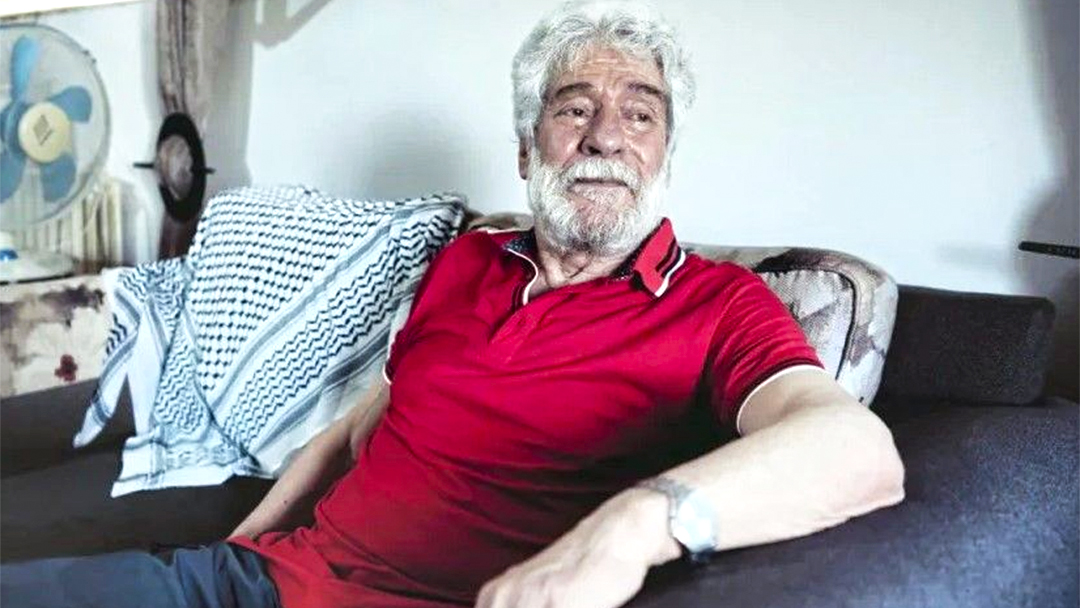
After 41 years of unjust imprisonment in France, Lebanese revolutionary Georges Ibrahim Abdallah emerged unbowed, delivering a fiery call to action for Palestine’s freedom. Upon his release, he landed in Beirut to a hero’s welcome, immediately condemning Arab inaction and urging mass mobilization to break the siege on Gaza. “If two million Egyptians take to the streets, the genocide would end,” he declared, challenging Arab populations to rise against complicit regimes and tear open the Rafah border with collective resistance.
Abdallah, a Marxist-Leninist and founding leader of the Lebanese Armed Revolutionary Factions (LARF), defies simplistic labels. A Christian militant fighting for a predominantly Palestinian cause, his life embodies the intersection of faith, ideology, and anti-imperialism. Convicted in a politically tainted trial for attacks on U.S. and Israeli targets in the 1980s—though never proven directly involved—he spent decades imprisoned beyond his original sentence due to U.S. and Israeli pressure. His release marks not an endpoint, but a resurgence. As journalist Wafica Ibrahim noted, Abdallah’s return heralds a reinvigorated resistance, offering Lebanon and the Arab world a symbol of unyielding defiance.
His words resonate amid escalating regional solidarity. Yemen’s leaders have pledged to lead collective action against Israel, while Ansar Allah’s Abdul-Malik al-Houthi called for Arab governments to allow mass marches toward Gaza. Abdallah’s message, however, extends beyond the Middle East. To Western supporters of Palestine, he represents a challenge: reject lukewarm solidarity and openly embrace the Resistance without apology. The Axis of Resistance, he underscores, transcends sectarian or ideological divides, uniting Marxists, Christians, and Muslims under the banner of liberation.
Abdallah’s legacy demands clarity in a time of crisis. Neutrality, he argues, only emboldens oppression. As Gaza’s survival hangs in the balance, his life’s work—forged in decades of prison struggle—urges the world to choose: stand with the oppressed or be complicit in their erasure. The path to victory, he reminds us, is paved by collective uprising.