

Since March CIJA representatives have met staff from the Prime Minister’s Office and Public Safety Canada, as well as the director of CSIS and multiple MPs, to discuss stripping the citizenship of Israel critics. In part, CIJA’s push to revoke citizenship is simply a racist dog whistle to smear anti-genocide...

The National Post (owned by an American Hedge-Fund, the Chatham Asset Management, with close ties to the U.S. Republican Party and headquartered in New Jersey) has a tooth to pick with any and all expressions of Left politics. It is also unconditionally pro-Israel to the degree of entirely effacing the...
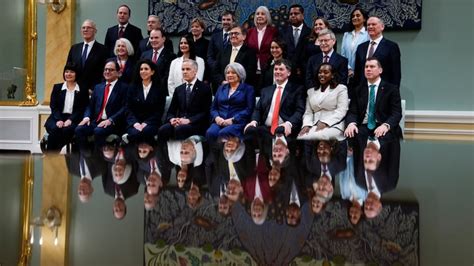
The scope of Carney’s support for the lawless genocidal Jewish supremacist state is stunning. In the last few days, his government granted Netanyahu access to Canadian skies, a Liberal MP was punished for voting against arms shipments and they labelled it racist to oppose this century’s leading racist movement.

The term “terrorist” functions as a new form of invalidation—casting suspicion on everyone—and as a way to render absurd any discourse or action that is unsettling, revolutionary, or aimed at social emancipation. The West wields this anathema unreservedly and unfailingly to silence and discredit all armed opposition. Zionism makes excessive...

Recently ten lawyers and the Canadian Antisemitism Education Foundation sent a letter to the Law Society of Ontario to call on them to hear a motion to prevent graduates of Toronto Metropolitan University’s (TMU) law school from ever practising in the province. They want the Law Society to revoke TMU’s...

There is no real difference between the craven hypocrisy, the self-serving opportunism and unseemly servility of a Mark Carney (like Justin Trudeau before him), a Pierre Poilievre or an Yves-François Blanchet when it comes to bowing before the altar of the Jewish Supremacist State of Israel. Perhaps the greatest hypocrite...
Bulletin







Children's Books from and about Palestine


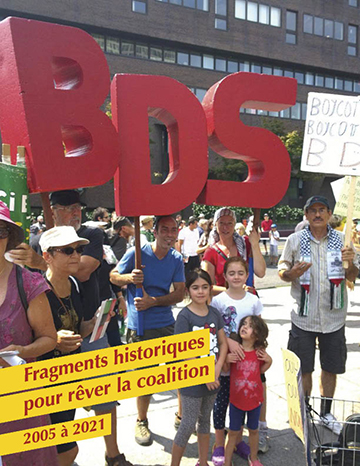
Fragments historiques pour rêver la coalition 2005 à 2021
Download the pdf to learn more about the history of the BDS movement in Québec. The document is in French.
Caisse de dépôt et placement du Québec invests in Israeli war crimes