Translated from French by PAJU
Leila Shahid, who was born Leila al-Husseini Shahid on July 13, 1949, in Beirut, Lebanon, and died on February 18, 2026, in Lussan, France, was a Palestinian diplomat, General Delegate of Palestine to France from 1994 to 2005, and General Delegate of Palestine to the European Union, Belgium, and Luxembourg from 2005 to 2015.
Leila Shahid was born into a family already deeply involved in the Palestinian national movement after the fall of the Ottoman Empire and the establishment of the Mandate for Palestine, which was to prepare for Palestinian independence. Her mother, Sirine Husseini Shahid, came from two prominent Jerusalem families: the al-Husseini family, to whom she was a great-niece of the Grand Mufti of Jerusalem, Mohammed Amin al-Husseini, and the al-Alami family. She was the granddaughter of Faydi al-Alami, mayor of Jerusalem from 1906 to 1909 and a member of the Ottoman parliament representing Jerusalem from 1914 to 1918. Faydi al-Alami’s father, Moussa al-Alami, was also mayor of Jerusalem in the late nineteenth century. Abd al-Kader al-Husseini, a fighter in the 1948 Palestine War who died in combat, was one of her cousins.
During the time of Mandatory Palestine, leaders of the Palestinian nationalist movement were deported by the British to military camps, and their families were deported to countries under French mandate. It was in this way that Leila Shahid’s mother was deported to Lebanon, where she met her future husband, Munib Shahid, a native of Acre in Palestine and great-grandson of Bahá’u’lláh, founder of the Bahá’í Faith. Munib was then studying medicine at the American University of Beirut (AUB), where he would later become a professor of medicine. They married in 1944 and had three daughters: Leila Shahid, who married Mohammad Berrada; Maya Shahid, who married David Corm; and Zeina Shahid, who married Souheil Rached.
The Six-Day War broke out on June 5, 1967, the day Leila Shahid took her baccalaureate exams at the French Protestant school in Beirut. Devastated by the unexpected defeat of the Syrian, Egyptian, and Jordanian armies in the face of the surprise Israeli attack, the young woman reacted by joining the Fatah movement. She decided to dedicate herself to social and political activism in the Palestinian refugee camps of South Lebanon.
In 1968, Leila Shahid began studying sociology and anthropology at the American University of Beirut (AUB), one of the historical centers of Palestinian political activism. In 1974, she defended her dissertation on the social structure of Palestinian refugee camps, and then enrolled at the École Pratique des Hautes Études (EPHE) in Paris to pursue a doctorate on the same subject. In Paris, she met Ezzedine Kalak, the future representative of the Palestine Liberation Organization (PLO) in France, who was assassinated in 1978. He encouraged her to succeed him as president of the General Union of Palestinian Students (GUPS) in France in 1976.
Moving in intellectual circles that included academics, writers, New Wave filmmakers, and critics from the film journal Cahiers du Cinéma, the young activist met the Moroccan writer Mohamed Berrada, whom she married in 1978. They lived in Morocco for nearly ten years, where they frequently hosted their friend Jean Genet, and then, after Brussels, in a hamlet in the Gard, a department in southern France.
In September 1982, accompanied by Jean Genet, Leïla Shahid traveled to Beirut. It was then that the massacres of the Sabra and Shatila refugee camps, located south of the city, took place, massacres perpetrated by the Lebanese Phalangists. The Israeli army was accused of bearing indirect responsibility for failing to prevent them, despite controlling access to the camps. Upon arriving there, Leila Shahid and Jean Genet discovered a vision of horror which would inspire the writer to write Quatre Heures à Chatila and Captif Amoureux, dedicated to the Palestinians.
In 1989, Leila Shahid was appointed PLO representative to Ireland. In 1990, she was appointed PLO representative to the Netherlands and Denmark. From 1994 to 2005, she served as the General Delegate of Palestine to France.
From 2005 to 2015, Leila Shahid was the General Delegate of Palestine to the European Union in Brussels. In addition to her regular media appearances and political activism, in the autumn of 2008 she launched the Saison Artistique et Culturelle Masarat Palestine in the French Community of Wallonia-Brussels, under the patronage of the Minister of International Relations of the French Community and with the support of the Minister of Culture. The Palestinian organizing committee was chaired by the poet Mahmoud Darwish, who died in August 2008.
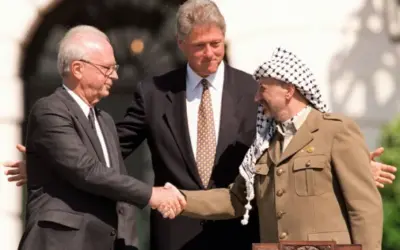
She was able to visit the Palestinian territories for the first time in 1994 after the signing of the Oslo Accords in 1993. In 1999 and 2000, she participated in Richard Dindo’s film, Jean Genet à Chatila. She is one of the three promoters of the Bertrand Russell Tribunal on Palestine, whose work began on March 4, 2009. In March 2009, Michèle Collery dedicated a film to her, produced by the Arte channel and Swiss Romande Television (TSR), entitled “Leïla Shahid, l’espoir en exil.” In 2017, Michèle Collery co-directed, with Leïla Shahid, the documentary ” Jean Genet, un captif amoureux, parcours d’un poète combattant .”
In 2012, she made the disillusioned observation that the Palestinian Authority’s decision twenty years earlier to renounce armed struggle had not borne fruit: “Nineteen years ago, we decided to end the military struggle and negotiate a two-state solution, but we have failed. For twenty years, we have been negotiating a solution to the forty-five-year military occupation of our territories. We haven’t even succeeded in forcing the withdrawal of the Israeli army from Gaza, the West Bank, and East Jerusalem. Let’s face reality. The international community is also responsible for our own failure.”
In 2015, she retired from her professional career to dedicate herself to cultural activities for the Palestinian diaspora.
On October 9, 2023, on France Inter radio, in an interview with Elie Barnavi, former Israeli ambassador to France, she stated that the images were horrific and, like Barnavi, that she was there to try to understand the causes of this situation.
She disputed the notion that this attack was ideological and reminded listeners that Palestine has been living under Israeli military occupation for fifty-six years, that Palestinians are dying in a ghetto, without drinking water or access to healthcare, and that this can provoke rage and anger.
On Wednesday, February 18, 2026, after suffering from a serious illness for several years, she took her own life at her home in La Lèque, a hamlet in the commune of Lussan.
Elie Barnavi, former Israeli ambassador to France, said that “Leila Shahid was a very vehement advocate for the Palestinian cause, but she was also committed to peace, as she supported the two-state solution and mutual recognition.”
Hubert Védrine, former French Minister of Foreign Affairs, said that “Leila Shahid was an exceptional figure who never abandoned the idea of a two-state solution. She was a symbol of what came before, a time of great hope.”
https://en.wikipedia.org/wiki/Leila_Shahid
https://www.fischer02003.over-blog.com/2026/02/hommage-a-leila-shahid.html