Translated from French by PAJU
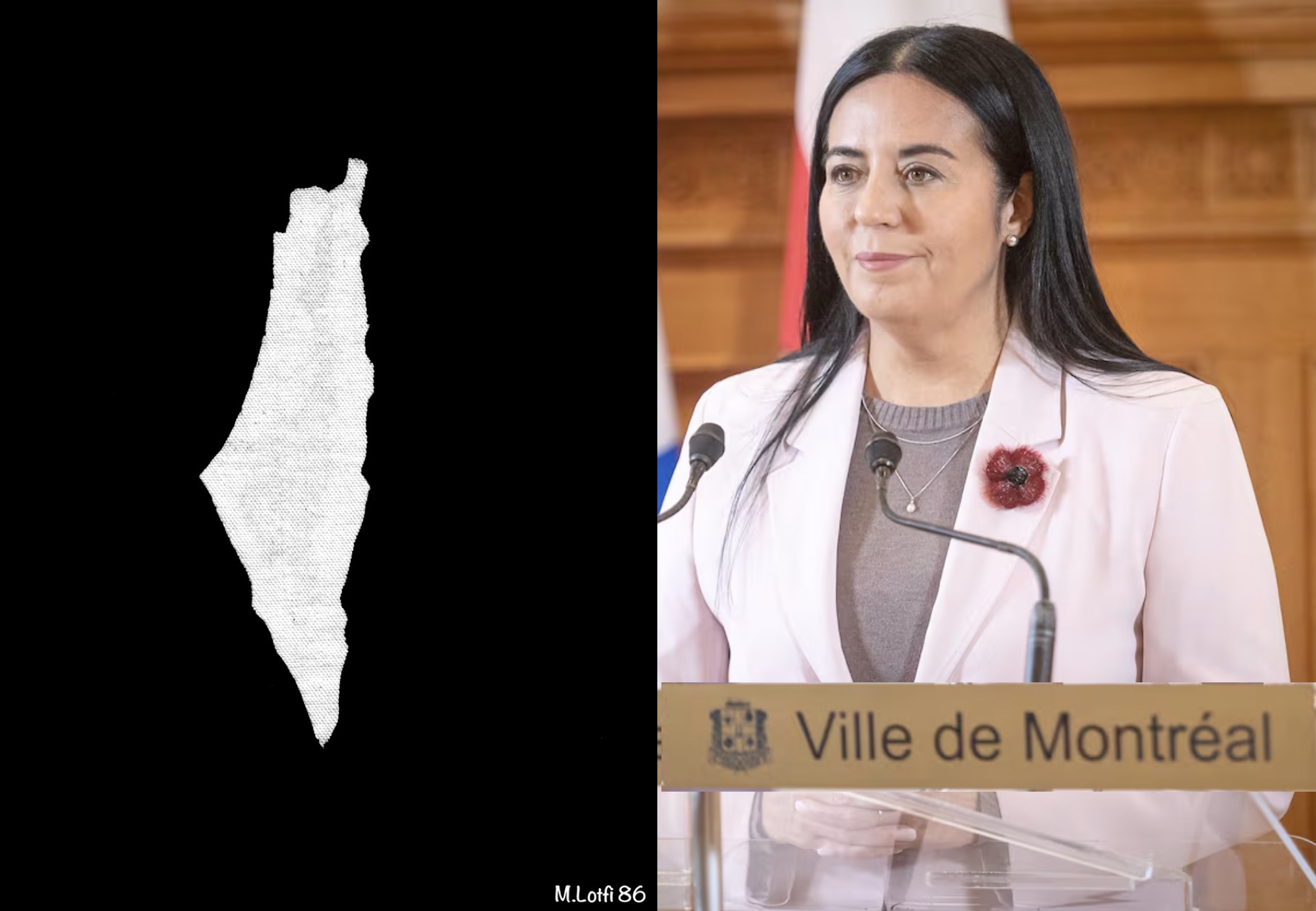
Mayor Ferrada,
Yesterday, I wrote to you asking you to help Montreal make history. Today, after the vote, I must write to you differently. History doesn’t only remember what we did. It also remembers what we refused to do.
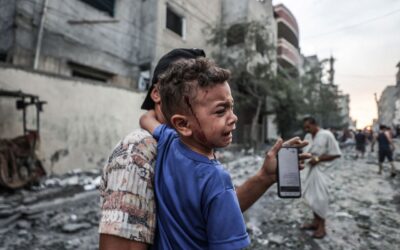
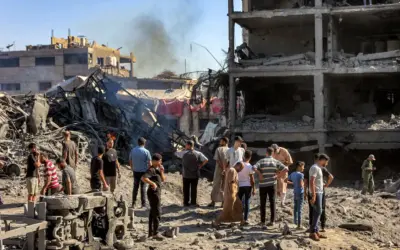
Since October 8, 2023, thousands of children in Gaza have lost a leg, an arm, a father, a mother, a brother, a sister, sometimes their entire family. Children have lost their homes, their schools, their neighborhoods, their futures. They have grown up amidst the ruins with a fear that no child should ever know.
This is no longer a geopolitical abstraction. This is no longer a distant debate. This is about children. This is about an entire people and their future. A people who, since 1948, have lived under a regime of Zionist repression.
Children who no longer know their mothers’ faces. Children who carry within them the memory of the bombs that fell upon their heads. Children from whom a leg, an arm, a home, a family has been taken, and from whom we now risk taking something else: the certainty that the world sees them. Montreal is not outside the world.
Montrealers asked you to respond to this tragedy with a concrete political action: severing Montreal’s institutional ties with the State of Israel. This request was not antisemitic. It was not directed at Montreal Jews, Israeli citizens, a religion, or a culture. It was directed at state policies.
This distinction is fundamental. Criticizing the Israeli government is not hating Jews. Thousands of Jews in Montreal, Quebec, Canada, and elsewhere are themselves denouncing these policies. Organizations like PAJU and Independent Jewish Voices are courageously leading this protest.
We do not protect Jews by asking the world to turn a blind eye to the suffering of Palestinians. We do not fight antisemitism by demanding silence. And we do not build a society by asking victims to remain silent to preserve the consciences of war criminals.
Yet, your administration amended the motion to the point of stripping it of its essential meaning. We wanted solidarity that meant something. We got solidarity without consequences. We wanted a political gesture. We got a political declaration. By trying to please everyone, we end up defending no one.
What kind of solidarity are we talking about when it costs nothing to the one who proclaims it? A motion that alters no institutional ties, no partnerships, no contracts, no official relationships—what power does it have in the face of those who have lost everything?
What does the word “solidarity” mean to the Palestinian child who wakes up in a bombed-out hospital, missing a leg? To the ones searching for their mothers under the rubble? To the one who no longer has a home?
A municipal motion will not give the children of Gaza back their homes. It will not give them back their limbs. It will not resurrect their parents. But it can tell them something essential. We saw you. Your lives matter. Your suffering is not invisible. This is the political greatness we asked of you.
In 1989, Montreal chose to oppose South African apartheid. When Nelson Mandela came here in 1990, he did not come to greet a city that had chosen neutrality. He came to greet a city that had chosen to take a stand.
On August 24, 2026, Montreal had the opportunity to reconnect with this history. It could have acknowledged that its power is limited, but that its conscience is not. It could have said, not in our name, not with our institutions, not with our money, not with our silence. But you chose another path. The path of silence.
You wanted to avoid division. Yet, a city is not united because its city council avoids uncomfortable topics. It is united when it is able to confront injustice and declare it unacceptable. Human horror is a concept universally recognizable to all well-informed human beings.
Social cohesion is not neutrality in the face of suffering. It is not the art of asking victims to lower their voices. True cohesion begins with a courageous disagreement with what has become intolerable, unbearable to any human conscience.
You may have avoided controversy. But you have not avoided the moral question. It remains. And it will haunt the children of Gaza long after today’s elected officials have left City Hall.
These children have been robbed of their limbs, their families, their homes, their childhood, and their dignity. And now, through our silence, our caution, and our empty promises, we are depriving them of one last thing: the solidarity to which they are entitled.
Mayor Ferrada, yesterday I asked you to make Montreal a part of history. Today, I fear your administration has chosen to miss the mark. Missing the mark of history. Missing the mark of courage. Missing the mark of greatness. Missing the mark of these Palestinian children, robbed of their dignity.
One day, you, or your children, or their children, will ask themselves why, when it had the power to speak out, Montreal chose to speak so quietly.
A truly humane city doesn’t measure its greatness by the power of its institutions. It measures it by how it responds when horror strikes, even far away in the world.
Montreal had a rendezvous with history. Above all, it had a rendezvous with humanity. And it missed both!
Mohamed Lotfi
August 25, 2026
Mohammed Lotfi.
Born in Settat, he studied philosophy and began his journalism career in Morocco. He moved to Quebec in 1982, where he pursued training in film and visual arts. Starting in 1985, he embarked on a long career in radio, notably with Radio-Canada. In 1990, he launched the project ‘Souverains anonymes,’ a program produced from inside a Montreal prison. In it, he facilitated dialogues between incarcerated individuals and artists, writers, and thinkers, transforming radio into a space of dignity and rehabilitation. In 2019, he published ‘Vols de temps’ and the following year received the Guy Maufette Prize, Quebec’s highest distinction in radio.