Note that all phrases which appear in bold have been set in bold by PAJU to higlight what we consider to be of particular significance. The phrases do not appear in bold in the original article published in Substack.
Anyone who has ever questioned the soundness of the Chomsky-Herman propaganda model of mass media has surely had that skepticism put to the test over the past twenty-two months. In particular, the axiom that the media “serve to mobilize support for the special interests that dominate the state” by distorting or suppressing facts, drives reporting on Gaza by Western news outlets. Furthermore, the practice of distinguishing between “worthy” and “unworthy” victims, “portraying murderous aggression as a defense of freedom,” perfectly encapsulates mainstream news coverage of Israel’s indiscriminate and brutal mass killings of Palestinian civilians.[1]
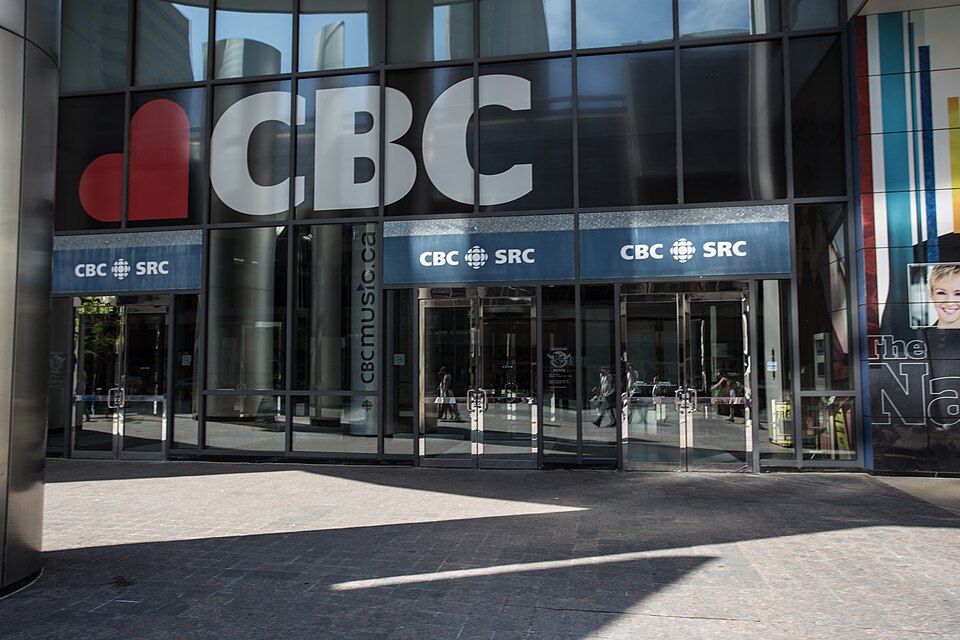
‘Consent’ for this barbarity could not have been ‘manufactured’ without the uniform collaboration of a weak and pliable media system. And while one might expect more impartial reporting from public media institutions, regrettably this has not been the case. The Canadian Broadcasting Corporation (CBC), Canada’s national public broadcaster for radio, television, and online news, stands as a glaring example of this abysmal failure. In its refusal to provide accurate, honest, and comprehensive coverage of Israel’s vicious assault on Gaza, the CBC has denied Canadians the information they need to act on their conscience and pressure their government to help end the savagery. In effect, the CBC has made Canadians complicit in genocide.
Overall, like media in other Western countries, Canadian coverage of Gaza’s devastation has been sorely lacking in truth and balance, primarily due to the dominance of right-leaning news outlets, led by the Postmedia Network. With a U.S.-based hedge fund as its majority owner, Postmedia controls roughly 112 Canadian newspapers, all pushing a uniform editorial stance. Its flagship paper, the National Post, exemplifies this bias, churning out editorial content on the ongoing crisis that could easily have been written by Likud – if not for the simplistic formulations more fitting for a middle-school newsletter.
Confronted with this bleak media landscape, many Canadians turned to the CBC, hoping for more informed and impartial perspectives on these terrible events. What they found was a public network that echoed the same biased narratives, and produced the same misleading, manipulative reporting promulgated by the rest of the media establishment. What is more, as growing numbers of Canadians registered their displeasure with the CBC’s coverage, it responded with craven, self-justifying apologetics.
The CBC and Gaza: A Mandate Betrayed
To fulfill its mandate, the CBC has outlined a Mission, guided by its Journalistic Standards and Practices (JSP), in which it pledges to “serve the public interest” by “informing, revealing, and enhancing the understanding of issues of public importance,” while remaining “independent of all lobbies and political or economic influence.” But from the outset of the attack on Gaza, the CBC betrayed each of these fundamental principles, as well as others, and continues to do so.
First, like other Western media, the CBC failed to provide essential context regarding the Hamas attack on October 7, 2023, consistently neglecting to mention the 75-year-long illegal occupation and its depredations, as well as the dozens of UN Security Council resolutions spanning decades that have condemned Israel. And as the devastating Israeli attack unfolded, the CBC severely underreported or omitted other key factors, such as the legal indictments against Israel, the intentional destruction of Gaza’s healthcare system, the media blackout, and the worldwide protests against genocide.
Legal Indictments Against Israel
Notably, the CBC has failed to report on Israel’s most recent prosecutions under international law: the January 2024 ruling from the International Court of Justice (ICJ) that Israel is committing a “plausible” genocide; the July 2024 ICJ decision that Israel’s 57-year occupation is illegal; the September 2024 United Nations General Assembly (UNGA) vote in favor of sanctions against Israel for these crimes; and the arrest warrants for the Israeli Prime Minister and Defense Minister. After a brief mention at the time of their announcement, these rulings were effectively erased from CBC coverage – in direct contradiction of its mission to “invest our time and our skills to learn, understand, and clearly explain the facts to our audience.”
The UNGA ruling also singled out member states as legally obligated to end their complicity in Israel’s apartheid regime, a point reinforced by the UN Special Rapporteur on the Occupied Palestinian Territories, Francesca Albanese, during her November 2024 visit to Canada. She used the occasion to remind the Canadian government of its responsibilities under international law and urged it to conduct an audit of its collaborations with Israel. The CBC disregarded this opportunity to investigate Canada’s legal obligations or to examine Albanese’s newly-released report documenting the “scorched-earth catastrophe” Israel was inflicting on Gaza. Nor did the CBC even mention the fact that Albanese’s scheduled meetings with Canadian government officials were abruptly cancelled, which she attributed to “very vocal, very virulent, very aggressive” pressure from pro-Israel lobby groups. These omissions are both egregious and consequential: had Canadians been fully informed of them, they likely would have demanded some form of action from their government, perhaps even the imposition of sanctions on Israel.
Destruction of Gaza’s Healthcare System
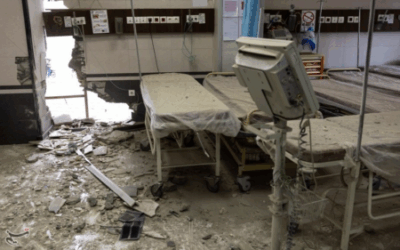
The CBC also seriously underreported the devastating destruction of Gaza’s healthcare system. In July 2024, 99 healthcare workers wrote to President Biden stating that “every single signatory to this letter treated children in Gaza who suffered violence that must have been deliberately directed at them.” In August, Canadian healthcare workers sent a similar letter to Prime Minister Trudeau. In October 2024, the UN Independent International Commission of Inquiry on the Occupied Palestinian Territory issued a report calling Israel’s destruction of Gaza’s healthcare system war crimes and crimes against humanity.
And a study by the prestigious Lancet estimated Gaza’s death toll at a staggering 186,000. The CBC ignored these urgent letters and deliberately suppressed these essential and damning findings. Furthermore, several medical personnel in Gaza – including an American pediatrician and a British surgeon – reported this summer that Israeli forces appeared to be shooting children deliberately, targeting specific body parts on certain days, “almost like a game of target practice.” The CBC provided no coverage or comment on this alarming claim.
Media Blackout
Israel’s media blackout in Gaza is another critical issue the CBC has ignored. Foreign journalists and media workers are barred from entering Gaza, and of those who were already inside, over 192 have been killed – many of them deliberately targeted. Indeed, more journalists have died in Gaza than in any other conflict in history – surpassing the combined total of those killed in the U.S. Civil War, World Wars I and II, the Korean and Vietnam Wars, the Yugoslav Wars, the War in Afghanistan, and the ongoing Ukraine War. Around 380 more journalists have been injured.
Although the CBC cannot be blamed for its limited access to Gaza, this very restriction is a crucial part of the story. The network should expose Israel’s clear strategy to suppress key evidence, which would not only help audiences understand why its reporters struggle to ‘confirm’ certain facts and rely so heavily on Israeli sources, but also reveal to Canadians the true extent of the freedom of information provided by Canada’s ‘great friend and ally’ and the ‘only democracy in the Middle East’. Instead, the CBC readily yields to Israeli demands — even agreeing not to record or broadcast aerial footage of Gaza while covering a recent aid-drop flight, while ITV News ignored the same directive and broadcast stark aerial footage of the devastation.
Biased Selection of Sources
The CBC promotes its commitment to “diversity of opinion,” but repeatedly favors pro-Israel spokespeople. For example, amid numerous staged disputes over casualty figures from the so-called “Hamas-run Health Ministry,” CBC News Live aired an interview with a Zionist professor asserting that the Palestinian death toll had been inflated. This contradicted international agencies, as well as the Lancet, which found no evidence of inflated mortality reporting and, indeed, estimated the death toll to be nearly six times higher than Hamas reported. The CBC host did not challenge the professor’s claims, allowing him to dismiss statistics from “a police state like Hamas, which very carefully controls information” – unlike Israel, apparently. Beyond its shoddy sourcing here, this segment earned the CBC the dubious distinction of actively colluding in genocide denial.
Complaints to the CBC
The network’s Office of the Ombudsman has been overwhelmed with complaints about the CBC’s coverage, receiving nearly 1,900 grievances from October 7, 2023 to May 2024, about 40% of all complaints for that period. While the CBC claims that more than half of these complaints protested anti-Israel bias, a closer look reveals that many of these originated from pro-Israel organizations rather than individuals. One features prominently – Honest Reporting Canada (HRC) – a group that Ombudsman Jack Nagler describes euphemistically as “an organization which monitors media coverage of Israel and the Middle East” – analogous to calling the Third Reich an institution dedicated to social reform – technically accurate, but grotesquely evasive of its true purpose.
As Mr. Nagler knows, HRC is a (covertly) well-funded advocacy network whose operations are closely aligned with the Israeli government. Moreover, as a registered Canadian charity, the Canadian taxpayer helps to fund its malign efforts to characterize Israel’s crimes as self defence. A conniving flak machine that attacks and suppresses any critique of Israel, often by employing the antisemitism smear, HRC has a particular animus for the CBC, which accounts for almost 40% of its action alerts, op-eds, and complaints.
In the weeks following the events of October 7, 2023, HRC singled out CBC journalists 19 times for criticism, and boasts of having mobilized its subscribers to send over 25,000 emails to the President of CBC. Journalists are often directly targeted by HRC, prompting the Canada Press Freedom Project to urge reporters to report threats and press freedom violations instigated by HRC. In November 2024, HRC’s assistant director, Robert Walker, was criminally charged with 17 counts of mischief for allegedly vandalizing properties in a Toronto neighborhood with anti-Palestinian graffiti. Ombudsman Nagler would be well aware of these dynamics, and should have been transparent about them in his reports.
Ombudsman’s Complaint Review Process
Mr. Nagler published several reviews of these complaints, though it should be noted that the Ombudsman’s office evaluates only the content of reported stories, not significant omissions. This narrow focus is a major flaw in the CBC’s complaint review process, as the network’s failure to provide crucial context is the foremost weakness in its coverage.
In his reviews, Nagler laments the divisiveness of the issue, and claims that the “fog of war“ complicates getting the story straight – though “fog” really serves as a tidy euphemism for Israel’s media blackout. His assessments too often default to the “both sides” fallacy – the deliberate pretension that there is equivalence in the asymmetrical power relationship between Israel and Gaza. And, predictably, the reviews almost always find that the CBC upheld its Journalistic Standards and Practices (JSP), with only token criticisms on minor points.
All too often his reviews concede points to pro-Israel complainants. For instance, in one case, a complainant argued that a radio interview with a professor was biased against Israel, based on the host’s “mhm” response when the guest mentioned “Gaza’s 17-year siege.” Despite such trivial evidence, Nagler agreed that the host did not adhere to the CBC’s impartiality guidelines: “we do not promote any particular point of view on matters of public debate.” Though he stressed that there was no evidence of intentional bias on the part of the host, he argued that she “affected the way listeners would interpret the segment” – a conclusion that is not only implausible but also blatantly ignores the undeniable factual reality of Gaza’s siege.
Another review examined the devastating missile strike on al-Ahli Baptist Hospital in Gaza City on October 17, 2023. Israel denied responsibility, though its guilt was implied by its damage-control efforts, including promoting a fabricated video and fake audio recordings. An Honest Reporting Canada subscriber objected to the CBC headline, “Hundreds killed in Israeli airstrike on Gaza City hospital,” claiming there was no proof Israel was responsible, and arguing that Hamas could not be trusted as a source. Ombudsman Nagler made the incongruous claim that, while “the headline was technically accurate,” it was never intended to suggest that the CBC was attributing responsibility to Israel.
He then praised the CBC for updating the story to prioritize the IDF as a more reliable source, an assurance reinforced by Nancy Waugh, Senior Manager for Journalistic Standards, who stated that Israeli denial of involvement would now be incorporated into all subsequent reports on this incident, and added – gratuitously – that the CBC had “been exceptionally clear about how Hamas operates.”
The Executive Director of Honest Reporting Canada personally filed a complaint about a story on a Palestinian girl who lost both legs in an Israeli missile strike, arguing there was no proof of Israeli involvement. Nagler admitted there was insufficient evidence to definitively attribute the strike to Israel but called it “obviously the most likely cause.” One may ask why, if it were so obvious, he entertained the complaint in the first place; in any case, rather than supporting his position with available evidence, such as UNICEF’s report documenting “the largest cohort of pediatric amputees in history,” Nagler inexplicably conceded the complainant’s point.
Overall, these reviews – along with others of a similar nature – reveal serious issues that undermine the CBC’s core mission of dedicating time and expertise to understanding and truthfully communicating the facts to its audience. That several of the reviews garnered praise from Honest Reporting Canada is, to say the least, troubling – and deeply revealing. Receiving accolades from such a deceptive and compromised organization raises serious questions about the impartiality and credibility of the CBC’s oversight process.
Criticism of CBC by other Media Outlets
CBC’s coverage has been criticized by a few reputable media outlets, in particular the Canadian news website The Breach, which has published several articles exposing the CBC’s biased and substandard reporting on Israel’s genocidal campaign. One such article, written by a former CBC producer, revealed the “chilling effect” of the network’s anti-Palestinian bias, including the cancellation of Palestinian guests and intense pressure from complaint campaigns spearheaded by Honest Reporting Canada. Ultimately, the producer faced accusations of antisemitism and eventually resigned in frustration.
The Breach article caught the attention of Brodie Fenlon, General Manager and Editor-in-Chief of CBC News, who responded defensively the next day. He suggested that, because of the “personal and divisive” nature of the issue, CBC will “never be able to satisfy everyone’s expectations,” as if pandering to personal prejudices should ever be an acceptable goal of honest and competent journalism. Expressing disappointment in his former employee’s allegations, Fenlon dismissed the article’s “broad conclusions” as false, and then tendered a self-justifying, embarrassing, and at times maudlin jumble of apologetics and misleading arguments. Fenlon lamented the “moments where we have not lived up to our values of inclusivity . . . times when we stumbled, when we were too careful or not careful enough. . . . How many of us have had friends or families pulled apart by this story? How many of us have felt anger or sadness when talking to someone ignorant of its history and complexities?”
This faux mea culpa serves more as a strategic deflection of legitimate criticism than a sincere effort to address any of the former employee’s points. It creates the illusion of remorse – though it is unclear for what, exactly – without admitting the need for meaningful change in how stories are framed, whose voices are prioritized, and how editorial decisions are made. It also ignores a fundamental truth: for one side of the so-called ‘divide’, the emotional toll is unimaginable suffering, while for the other, it is mostly the discomfort of confronting its own complicity in that suffering. And if there is any ignorance about “the story’s history and complexities,” culpability for that lies squarely with the CBC and other Western media due to their near-total omission of the historical context leading up to October 7.
Given the scale of death and destruction in Gaza, it is difficult to imagine a more hollow and fatuous response from the Editor-in-Chief.
Finally, another article in The Breach highlighted a new level of defensiveness by CBC management. The piece dealt with complaints from a professor who criticized the CBC for using “toxic” adjectives to describe Hamas’s violence, while employing more neutral language to characterize Israel’s profoundly more brutal aggression.
CBC Senior Manager, Nancy Waugh, defended the language, claiming a distinction in how the violence is carried out: Hamas gunmen “attack Israelis directly” whereas Israel’s violence is “carried out remotely,” with the results being unseen by those responsible and the source of harm invisible to the victims. This grotesque justification for state violence, callously dismissing its catastrophic toll on victims, must stand out in Western media as one of the more appalling defenses of Israel’s genocide – despite fierce competition.
Capitulation to Pressure, Not Principle
In summary, like other Western media, the CBC’s coverage of Gaza does not differentiate itself from that of corporate media, which has shaped public opinion on the genocide through selective language, omission of crucial historical context, and the dehumanization of Palestinians. However, given the particular ruthlessness of Israel’s genocidal campaign, Canadians rightfully expect better from their public broadcaster. Gaza has endured the most intense aerial bombardment in history, with bombing density per square kilometer 10 times greater than in Vietnam. Experts estimate that 100,000 tons of explosives have been dropped on this tiny enclave – equivalent to six Hiroshimas.
While the official death toll in Gaza is reported at just over 62,000, this almost certainly represents a drastic undercount. More cautious estimates suggest that the true figure may be closer to 500,000 Palestinians killed in this relentless assault. A disproportionately high number of these deaths are children – as many as 18,000 – while UNICEF estimates that over 50,000 children have been either killed or injured. They have been torn apart by bombs, deliberately targeted by snipers, starved, frozen, left to die in incubators, or suffocated under rubble. If Canadians were routinely confronted with this carnage, their outrage surely would resound in the halls of power.
But instead, the CBC repeatedly capitulates to pressure from pro-Israel advocacy groups by deliberately minimizing or obscuring the true scale of Israel’s violence against Palestinians. No reasonable critic would deny the enormous power of this lobby, which has always used intimidation, harassment, and character assassination to silence criticism of Israel. But these are not ordinary times: this is a genocide in plain sight. Answering solely to the Canadian public – rather than hedge-fund shareholders – the CBC should be better shielded from this “flak” that pollutes our media landscape. Yet too often, it acquiesces even more readily, as we have seen time and again.
Conclusion: A Mandate Betrayal with Fatal Consequences
The CBC has long been a target of right-wing populist groups calling for its defunding, with the Conservative Party leader even promising to follow through on that agenda. Friends of Canadian Media, an advocacy group that has been defending public broadcasting and the CBC for 40 years, must now be wondering if it is worth the fight, considering the CBC’s dreadful record on Gaza. So too must the many journalists within the CBC who find themselves deeply compromised by the network’s blatant submission to pro-Israel pressure groups.
One CBC staff member described the network’s coverage as the “type of reporting that will one day be taught in schools and museums” as a factor that contributed to genocide. And in the documentary, Failing Gaza: Behind the Lens of Western Media, a Gazan surgeon remarks, “In the future, when we have a museum for this genocide . . . there will be a wing dedicated to the journalists who were the enablers of [it].”
While these journalists and their managers must eventually confront their own conscience, the painful reality is that the rest of us have been implicated in their failure. As Chomsky declares, “What the media are doing is ensuring that we do not act on our responsibilities, and that the interests of power are served, not the needs of the suffering people, nor even the needs of [domestic citizens], who would be horrified if they realized the blood dripping from their hands.” The CBC not only has distorted the reality of Israel’s enormous crimes, but it also has made Canadians complicit in them, their hands stained with the blood of innocent Palestinians.
Ross MacKay is Professor Emeritus at Vancouver Island University, and a founding member of Mid-Islanders for Justice and Peace in the Middle East.
[1] Edward S. Herman and Noam Chomsky, Manufacturing Consent: The Political Economy of the Mass Media (New York: Pantheon Books, 1988), pp. xi, 37.
https://alecmackay855192.substack.com/p/gaza-and-the-cbc-the-public-broadcaster
Ross MacKay
@alecmackay855192
Professor Emeritus at Vancouver Island University, and a founding member of Mid-Islanders for Justice and Peace in the Middle East.
See also:
- CBC and Its Normalization of Genocide – PAJU
- CBC has whitewashed Israel’s crimes in Gaza. I saw it firsthand ⋆ The Breach
- https://www.aa.com.tr/en/americas/journalist-resigns-from-canadian-public-broadcaster-for-cbc-s-complicity-in-gaza-genocide/3364680
- Open letter to CBC regarding Palestine coverage: CBCPalestine
CBC admits to dehumanizing Palestinians on air after CJPME pushback
· CBC admits to dehumanizing Palestinians on air after CJPME pushback – The Media Accountability Project
· https://www.cjpmemap.ca/alert_2025_05_06_cbc_news
Rally outside Winnipeg CBC building protests broadcaster’s Gaza coverage
- https://www.cbc.ca/news/canada/manitoba/winnipeg-cbc-gaza-protest-1.7610972
- https://truthout.org/articles/as-a-journalist-im-ashamed-to-see-western-media-failing-gaza-reporters/?utm_source=Truthout&utm_campaign=4b4f876fea-EMAIL_CAMPAIGN_2025_08_13_09_08&utm_medium=email&utm_term=0_bbb541a1db-4b4f876fea-650194349
- https://www.aa.com.tr/en/middle-east/photojournalist-resigns-from-reuters-over-its-betrayal-of-journalists-in-gaza/3669305
PAJU NOTE:
Palestinian and Jewish Unity was founded in November of 2000 shortly after the outset of the Second Intifada. As such we have had a quarter-century of experience both with political Jacks-in-the Box and less than transparent corporate media. Over those 25 years of pro-Palestinian activity, I can attest to the fact – as a founding member of PAJU – that the CBC has been among the least transparent and certainly among the most pro-Israel and anti-Palestinian of corporate media entities.
That is why we have chosen to publish in its entirety this damning overview of the CBC written by Ross Mackay and why we have also translated it to French. As we send our bulletins not only to English-language outlets and individuals but also to those who share the language of Molière in Quebec and France, we feel that it is a moral obligation, given Mr. Mackay’s meticulous appraisal of the CBC’s moral turpitude and overall shoddiness as a ‘public’ broadcaster, that his piece appear not only in English but in French as well.
I add to these notes a response I received from Jack Nagler who was not the CBC Ombudsman at the time, but rather held the title ‘Director, Journalistic Public Accountability and Engagement CBC News’ at the time. Esther Enkin was then the CBC Ombudsman. Nagler became CBC Ombudsman in 2018.
I suggest that you read Mr. Nagler’s response to my critique of CBC coverage and then return to read with introspection Ross Mackay’s excellent analysis of the CBC ‘Doublespeak.’ I am certain you will note the similarity between what Mr. Mackay describes regarding the CBC and Jack Nagler’s reply to me.
The CBC is what it is because the political Jacks-in-the-Box who govern this country are what they are. It is important that we see them for what they really are and not for what we would like to believe they are.
As the small child in the crowd witnessing the Emperor parading before them cried out in all his child-like honesty: “The Emperor has no clothes.”
Addendum
From Jack Nagler CBC News
Bruce Katz
Ile Perrot, Quebec
Dear Bruce Katz:
I am writing in reply to your email of April 8 addressed to Esther Enkin, CBC Ombudsman, concerning CBC’s coverage of recent deadly protests at the Israeli-Gaza border. It was “abysmal”, you wrote, suggesting that even in its choice of language, CBC News had been “intimidated” by the “pro-Israel lobby groups”.
Jennifer McGuire, General Manager and Editor in Chief, has asked me to reply to your email.
Let me assure you right at the beginning that CBC is not intimidated by pro-Israeli voices nor, for that matter, is it intimidated by pro-Palestinian voices.
CBC journalists are bound by a code of ethics that is considered to be rigorous, comprehensive and detailed. It is formulated in our own handbook of Journalistic Standards and Practices, which stresses accuracy, lack of bias and integrity in reporting. It is distributed to our journalists, producers, editors and managers at all levels of the Corporation in Canada and abroad. We expect them to be familiar with and follow it scrupulously. If you wish to read it, it is also publicly available on the CBC web site. You can find it here: http://www.cbc.radio-canada.ca/en/reporting-to-canadians/acts-and-policies/programming/journalism/
While I regret you are disappointed in CBC, I certainly disagree with your view of our coverage. Let me explain why I say that in response to the two specific matters you raised.
First, you wrote that CBC coverage tried to obscure Israel’s “premeditated killing of unarmed protesters by instead talking about ‘clashes’, ‘confrontations’ and ‘rock-throwing’. As an example, you included a link to the pro-Israel web site Honest Reporting and a post about a March 30 report by CBC News Middle East correspondent Derek Stoffel.
You quoted Mr. Stoffel as saying in the report “Some of those men were throwing stones and Molotov cocktails at the Israeli forces on the other side and they responded with tear gas and rubber bullets and in some cases with live ammunition”. “Note the aversion to the use of live ammunition by the IDF”, you wrote.
Just to be clear, Mr. Stoffel reported throughout the day that Friday, March 30, as the protests that began peacefully soon turned deadly. The report you cited was broadcast at about 6:40am ET. At that point, Mr. Stoffel said, Palestinians were massing along the border fence with Israel for the Great March for Return demonstration. He said that as the day began, even before the protest had started, one Palestinian man had been killed. He was a young farmer working in a field, he said, when an Israeli tank shell landed in the vicinity killing him and wounding another Palestinian man.
As he was reporting, he added, “We have just heard from the Palestinian Information Ministry that a second Palestinian man has been killed in today’s demonstrations”.
The demonstration became increasingly violent as the day went on and the number of Palestinian casualties grew. In his report two hours later at 8:40am ET that morning Mr. Stoffel reported that at least seven Palestinian had been killed and hundreds wounded. “Live ammunition has been used”, he said, “and that has led to fatalities and a large number of wounded”. “The IDF has increased the number of troops in the area, including the number of sharpshooters”. He concluded the report by saying that Israeli human rights organizations are demanding an investigation into the IDF using live ammunition against unarmed protesters”.
CBC News Network carried reports by Mr. Stoffel every hour, often twice an hour, throughout the day Friday. As more reports of death and injury came in, he reported them. At noon, he said the number of wounded Palestinians had reached over a thousand. At 2pm ET he said the 12 Palestinians had been killed. In reports a few hours later, he said 15 Palestinians had been killed and over 1,400 wounded.
The point here is that it appears that you wrote to us after seeing one of the first reports about the protest. As it became bloodier through the day and the number of Palestinian casualties soared, we reported that too.
In a second example, you cited a CBCNews.ca story, also posted on March 30, under the headline, “At least 15 killed as Gaza-Israel border protest turns deadly”. You drew our attention to the story’s sub-headline “’Right of return’ mass sit-in organized by Hamas escalated into rock-slinging, tear gas firing”, writing that it “puts the onus on the Palestinians as the motive for the Israeli tear gas fire”.
Similar to the broadcast story, this online story was revised multiple times during the day. Among other things, the headline was changed to indicate the rising number of casualties. But, in a similar fashion, we should also have revised the sub-headline to better reflect the developing story. However, there is nothing in the existing sub-headline that could reasonably be understood as indicating causality. It simply says that the protest has “escalated into rock-slinging, tear gas firing”, giving equal weight to activities on both sides of the fence.
Moreover, you wrote, putting Right of return in “parentheses [sic]” suggests it is “pure invention” of the Palestinians, not a feature of “more than one hundred UN resolutions”.
The “Right of return” is a controversial matter, important to the Palestinians, rejected by the Israelis. We put “Right of return” in quotation marks to indicate that it is attributed (in this instance to the Palestinian protesters), not to CBC.
In addition, you wrote, the story “fails to mention the live fire from Israeli snipers”.
While early versions of the story posted Friday morning may not have simply because at that point there had been no live fire and very few casualties, I think you will find that as the violence increased later versions of the story talked about the use of live ammunition and at one point referred to “a row of [Israeli] snipers perched on a high earthen embankment facing the Gaza crowd.”
Finally, you suggested that we should include other views on the Palestinian-Israeli conflict.
In fact, I think you will find that in addition to our regular news coverage of events in the region – Mr. Stoffel’s reports among them – CBC News Opinion Section carries a broad range of views on this and other matters of interest and concern to Canadians. (You can find the section here: http://www.cbc.ca/news/opinion). It is CBC’s responsibility to ensure that Canadians are given a range of views and the opportunity and the information they need to make up their own minds about these issues and I believe we are doing that.
It is also my responsibility to tell you that if you are not satisfied with this response, you may wish to submit the matter for review by the CBC Ombudsman. The Office of the Ombudsman, an independent and impartial body reporting directly to the President, is responsible for evaluating program compliance with the CBC’s journalistic policies. The Ombudsman may be reached by email at Box 500, Terminal A, Toronto, Ontario M5W 1E6, or by fax at (416) 205-2825, or by email at ombudsman@cbc.ca.
Sincerely,
Jack Nagler
Director, Journalistic Public Accountability and Engagement
CBC News